The Shift
From Change Teams to Change Leaders
For decades, our field worked to prove that change management matters. It does. Change teams brought structure, tools and discipline to big initiatives.
But there was an unintended trade-off. As change became a specialist's job, many leaders stepped back from it. And employees don't experience a change through a change team. They experience it through their own leader.
The research backs this up. When McKinsey ranked 24 transformation actions by their effect on success, a dedicated central team showed no clear link. Leader behaviors did. Leaders who communicated openly about progress made success 8 times as likely. Leaders who role-modeled the change made it 5.3 times as likely.
The shift now is equipping the leaders people already follow to lead the change themselves. It scales in a way a separate team can't.

Change Leadership Delivers Strategic Outcomes

Collaborate
When leaders bring their teams into the change instead of handing it down, people have a voice in how it works.
People who help shape a change stay engaged in making it work.

Support
Help from their own leader gets people through the learning curve faster.
Less time stuck means more time doing the work well.

Efficiency
Clear, open communication at every level means fewer stalls and faster decisions.
Each change lands sooner, and your organization is ready for the next one.

Inspire
Leaders who show why the change matters get people using the new tools and ways of working, not just tolerating them.
That adoption is where your investment pays off.
The Cost of Leaving Change to Chance
The Strategy May Not be the Problem

The strategy usually isn't wrong. The gap is whether the people leading the work are set up to lead the change. Without managers and frontline teams on board, the change never had a chance to land.
Most Leaders Aren't Failing at Change
Most leaders aren’t failing at change. They just haven’t been given the skills to lead it.
Leaders Believe they are Modeling the Change
Their people aren’t seeing it, and what people see is what they follow. Leaders are the change their employees experience.
Invest in the Leader. Everything They Lead Grows.
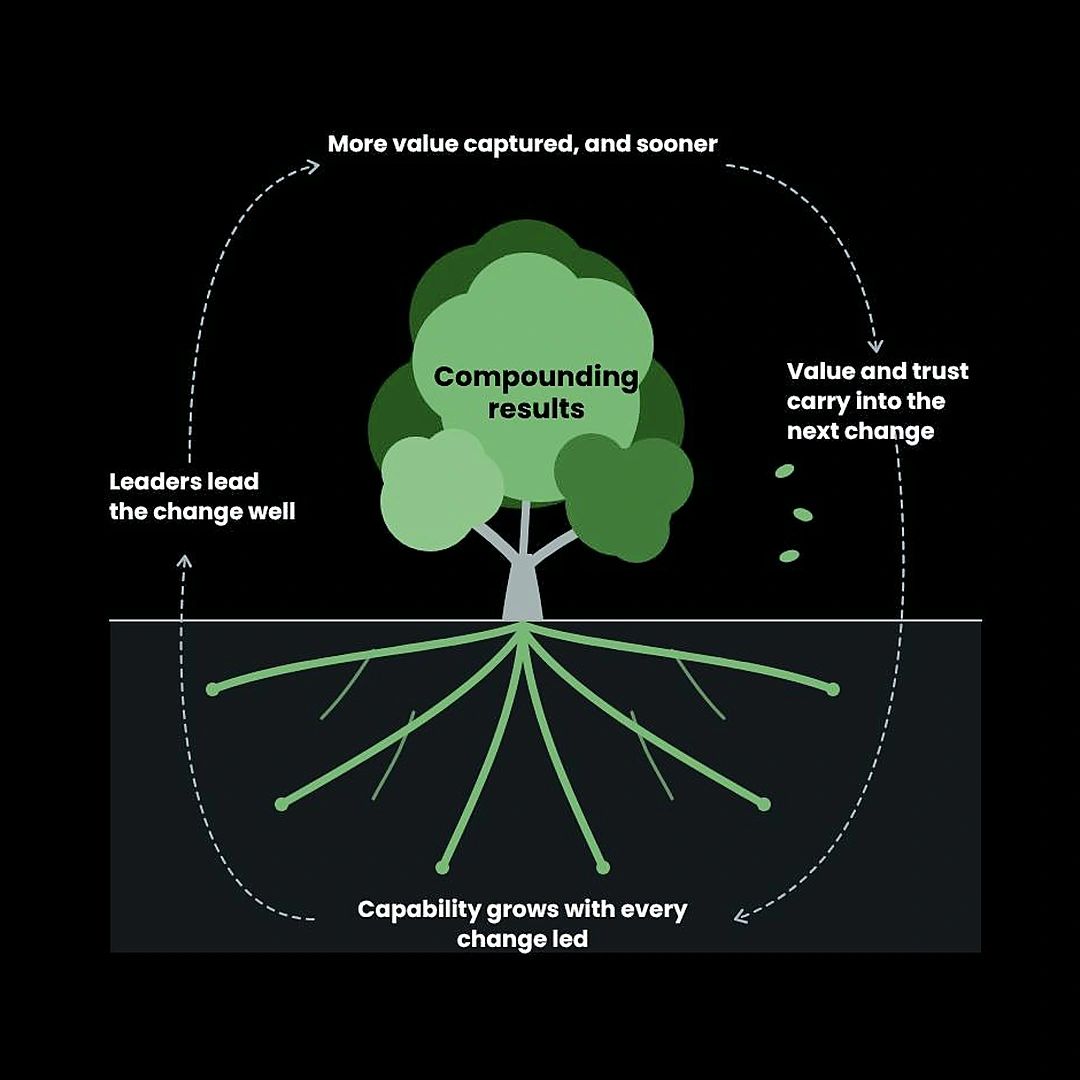
Where Change Takes Root
Build a leader’s ability to lead change, and it doesn’t stop with one initiative. It strengthens every effort that leader stewards, long after this change lands.
Every change led well leaves leaders more capable, so the next change starts stronger and the results build on each other.

What Change Leaders Actually Do
Six skills that Make Change Stick
Tell the Story:
Craft a change narrative that communicates purpose, builds urgency and sticks
Inspire & Motivate:
Understand stakeholder needs and readiness to build energy and commitment
Influence, Align & Own:
Model change behaviors and use influence to create ownership and momentum
Communicate & Engage
Deliver clear, cascading communication with feedback built in
Open Conversations
Foster honest dialogue that builds trust and works through resistance
Sustain Change, Resiliently
Embed change through rituals, metrics, reinforcement and celebrated wins
Build These Leadership Skills
These skills come to life as the six learning cycles of the Change Leader Lab. Leaders learn how to put them into use in real, daily, work.